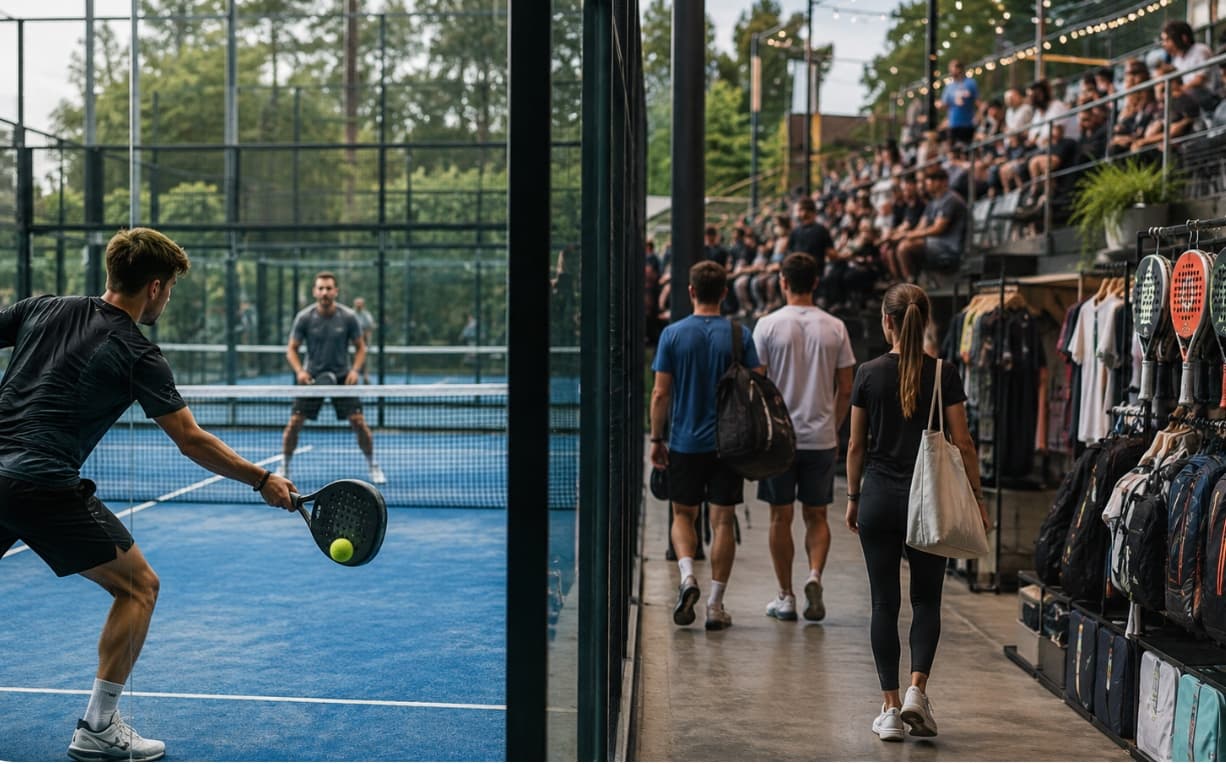
At Premier Padel's London tournament this week, the real action often seemed to be happening off court. Around the venue, racket brands, kit sellers and equipment stalls were doing brisk business, with hundreds of players and enthusiasts browsing grips, frames and court deals. Inside the arenas, though, some of the sport's biggest names played in front of noticeably empty seats.
That contrast captures where padel stands in Britain right now. People can't get enough of playing it. Watching it is another matter entirely.
A Sport on a Tear
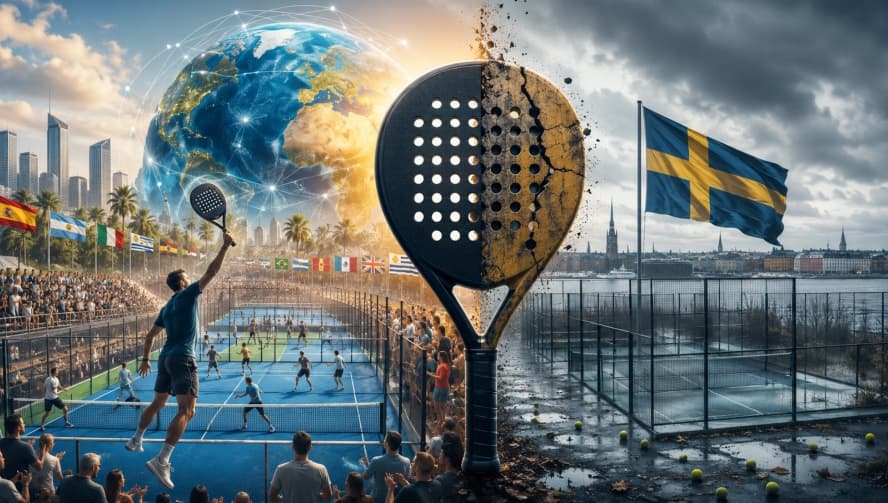
The growth figures are hard to overstate. Britain had fewer than 60 padel courts in 2018. Now there are more than 2,000. According to the body that oversees the sport alongside tennis, annual participation has jumped from roughly 15,000 players to over a million in under seven years, making padel one of the fastest-growing pastimes in the country.
The open question is whether that appetite for playing will ever translate into a genuine audience for watching the professionals.
A Glimpse of British Promise
Tuesday's opening day in London offered a hint of what that future could look like. Britain's top-ranked women's pair took a wildcard into their first top-tier Premier Padel event. Up against a seasoned international pairing, they dropped the first set heavily but pushed the second to a tie-break.
It was a real chance. Winning the tie-break would have forced a decider and possibly one of the week's biggest shocks. Friends in the crowd waved homemade banners, but the British pair stayed locked in. They lost 6-1, 7-6, though the effort suggested the gap to Europe's established pros is starting to close. Elsewhere, other British players put in solid shows despite losing, and one competitor became the first player under the British flag to win a Premier Padel main-draw match.
Why the Sport Hooks People So Fast
Part of padel's pull is how quickly beginners can enjoy it. It borrows tennis's scoring and rally structure but wraps the court in glass and mesh that keep points going, giving it something of squash's character. The learning curve is gentler than most racket sports, which goes a long way toward explaining why clubs have filled up so fast.
The real depth shows up once players improve. A game that looks simple on the surface turns out to have real tactical layers. Serves are underarm and outright winners are rare, so points are almost never settled by the first shot. Instead, players fight for the net, using lobs to push opponents back before moving forward themselves. Anticipation, footwork and shot choice matter more than power.
The bandeja sums this up well: a sliced overhead hit with less pace on purpose, letting the player who hit it recover and hold their net position. It's a shot built entirely around control rather than force.
Is the Men's Game Getting Too Powerful?
That balance is now under debate at the top level. As the men's players have grown stronger and more athletic, huge smashes that blast the ball out of the court have become far more common. They make for great highlight clips, but they also cut rallies short and squeeze out the patient, tactical exchanges many longtime fans see as the sport's heart.
One of the world's top ten men's players has said slower courts make for a better watch, since they lead to longer rallies and a broader mix of shots. On hot outdoor courts, where the ball moves faster and bounces harder off the glass, points can end almost instantly on one big overhead. The worry is that men's padel could end up leaning too heavily on raw finishing power, the way tennis sometimes leans too heavily on serving.
Why Many Fans Prefer the Women's Tour
That's pushed a lot of dedicated fans toward the women's game instead. Women's matches tend to run longer, with more changes of direction and more emphasis on disguise, spin and clever use of the glass. Smashes still matter, but they're rarely the whole story, leaving more room for tactical battles and comebacks.
One of the sport's top-ranked players is a good example of that approach. Now among the world's best, she's built her game on variety and deception rather than sheer power, changing angles late and working the rebound off the back glass in ways few others can. It's also a style club players can actually relate to and learn from, which may be part of why so many feel more connected to the women's tour than to the increasingly explosive men's game.
The Constant Partner-Swapping
Professional padel has one more quirk that sets it apart from most sports: how often partnerships change. Since it's played only as doubles, chemistry between two players matters enormously, and pairings often shift more than once in a season. It creates a transfer-market feel not unlike football, with in-form players regularly leaving partners behind to team up with other rising names.
That top player has compared it to a romantic relationship minus the romance, all the travel, training, meals, wins and losses shared with the same person day in and day out. Given that intensity, it's little wonder so many pairings eventually split.
Football's Fingerprints Are Everywhere
Football may end up being padel's biggest promotional asset. Plenty of top European footballers play the game and post about it regularly, and the crossover goes well beyond celebrity appearances. A number were among those at the London event, and sponsorships, branded rackets and even tournament marketing increasingly borrow football's look and language.
The money behind Premier Padel tells a similar story. The tour was launched by a Qatari state investment fund, and the London leg was staged by a company tied to Saudi Arabia's Public Investment Fund. Since starting in 2022, the circuit has grown from eight tournaments to 26 worldwide, wrapping up each year with a sold-out finals in Barcelona.
Britain Still Has Ground to Make Up
For all the excitement around the sport's growth, London also exposed how far British players still have to go. Several of the country's best have spent big chunks of their development in Spain, where coaching, academies and competitive depth remain well ahead of anything currently on offer at home. British players say reaching the top without relocating is possible, but most admit that time spent training in Spain is close to essential for anyone with real international ambitions. Britain's high-performance pathway, in other words, is still being built.
What Comes Next
Padel has already done something remarkable: turned itself into a mainstream participation sport in a country long dominated by football and cricket. Courts are full, investment keeps arriving, and the social appeal shows no sign of fading.
What's still unclear is whether Britain will ever embrace padel as a spectator sport with the same enthusiasm. Around the venue, most people seemed to be there as players and shoppers first, fans of the professional tour second, with carrier bags full of new rackets often drawing more attention than the match in progress.
That could shift as the sport matures, especially if British players keep improving and one eventually breaks into the world's elite. For now, padel in Britain looks less like a finished revolution and more like a fascinating work in progress: a game millions have taken up themselves, still waiting for the audience that will make the professional side of it truly matter.