
Padel is easy to start, but the glass walls give it a twist that can catch new players out. The good news is that you don’t need a tennis background, a powerful serve or a bag full of specialist kit. Learn a few simple rules, share the court with three other people and you can be rallying within minutes. Here’s what to expect from your first game.
What is padel?
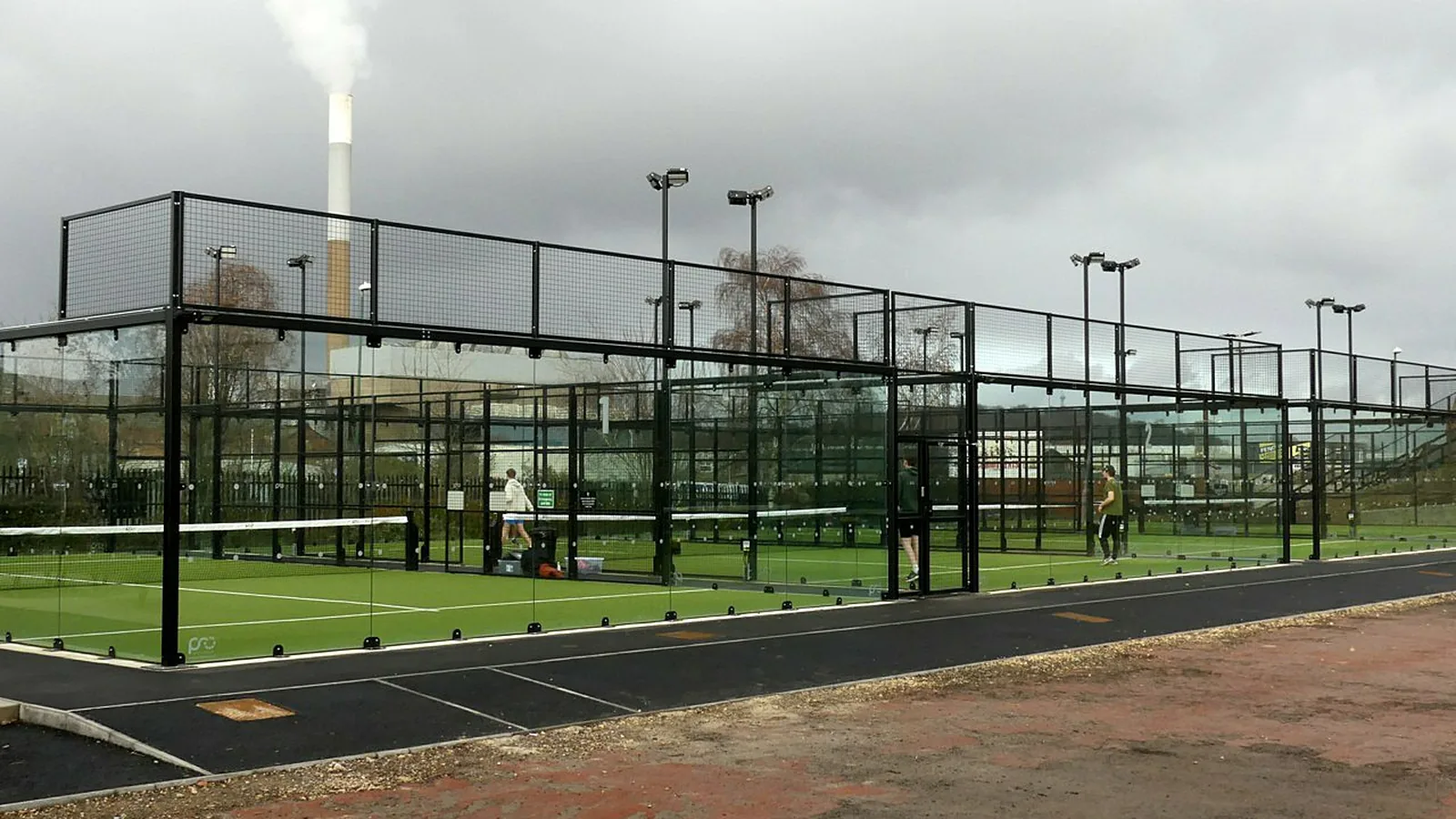
Padel is a racket sport, usually played as doubles, on a smaller enclosed court. The ball can rebound off the glass and mesh walls, so a rally doesn’t end just because the ball has passed you. You can let it bounce, read the rebound and play it back over the net.
The court measures 20 metres by 10 metres. The racket is solid and perforated, rather than strung like a tennis racket. Padel uses a softer, lower-bouncing ball, and the underarm serve makes it easier to get a point going. The Lawn Tennis Association (LTA) describes padel as a sport that people of mixed ages and abilities can play together. Its guide to padel and tennis explains the main differences.
The rules to know before you step on court
Serving
Every point starts with an underarm serve, hit diagonally into the opposite service box. Stand behind the service line, bounce the ball once on the ground and strike it at or below waist height. You get two serves, as in tennis.
The serve must bounce in the service box first. If it then touches the glass, play continues. If it hits the metal mesh before your opponents return it, that’s a fault. The returner must let the serve bounce before hitting it.
Rallies and walls
Once the serve has been returned, you can volley the ball or play it after one bounce. If it bounces on your side and then hits the glass or mesh, you can still return it. That’s the part beginners often miss: the walls keep the point alive.
The ball must land on your opponents’ side before it touches their wall. If you hit it straight into their glass or mesh without a floor bounce, you lose the point. The ball can also be played off the glass on your own side before it crosses the net. You can’t let it bounce twice, and you or your partner can only hit it once before sending it back.
For the full rules, the LTA’s padel rules document sets out the details. For your first social game, remember this: the ball needs to bounce on the other side first, but it can come back off the walls after that.
How padel scoring works
Scoring follows tennis: love, 15, 30, 40, then game. At 40–40, called deuce, the pair usually needs to win two points in a row. Some formats use a deciding point at deuce instead, so check with the organiser before a club session or competition.
A set is usually the first to six games, with a two-game lead required. At 6–6, a tie-break is played. Most matches are best of three sets, though social games may use a shorter format to fit the booking. Competition formats can differ: the LTA notes that a new “Star Point” system applies in some competitions from 2026. Ask which scoring rules your group is using, then keep the score out loud.
Your first game: what to bring and what to expect
You can usually hire a racket at the club, so there’s no need to buy one before you know whether you like the sport. Wear comfortable sports clothes and trainers with a grippy sole. Check with the venue about racket hire, balls and footwear rules when you book.
Most courts are booked by the hour or for 90 minutes, and the cost is shared between four players. For example, PADELHUB Bristol lists five indoor courts and an early-morning rate of £15 per court for 60 minutes, which comes to £3.75 each when four players split it. Peak court hire is listed at £40 an hour, or £10 each. Check the booking page for the current price before you set off. PADELHUB Bristol’s venue listing has its court and booking details.
In Bristol, that’s one option for a first hit. London players can use the LTA’s court finder to check local venues, coaching and whether a club offers pay-and-play. In Birmingham, published rates vary by venue and time, so check the booking platform before choosing a slot. If you’d like a lesson before playing socially, many venues offer beginner coaching.
On court, agree who takes the middle balls with your partner. Aim your first shots deep and down the middle, rather than trying to hit winners from the back. When the ball reaches the glass behind you, give yourself time to see its rebound. Beginners often swing too early or rush forward. Let the ball come to you.
Talk between points, call “mine” or “yours”, and keep moving with your partner. You don’t have to master wall shots in your first session. Get the serve in, keep the ball going and learn how the glass changes a rally. That is enough to make the next game more fun.
The best first-game advice
Don’t treat padel as tennis played on a smaller court. The walls reward patience, placement and teamwork more than raw power. Go with three people of a similar level, ask the club about equipment and scoring, then focus on keeping the ball in play. Once you’ve had a few rallies, the walls stop feeling like a surprise and start feeling like part of the game.