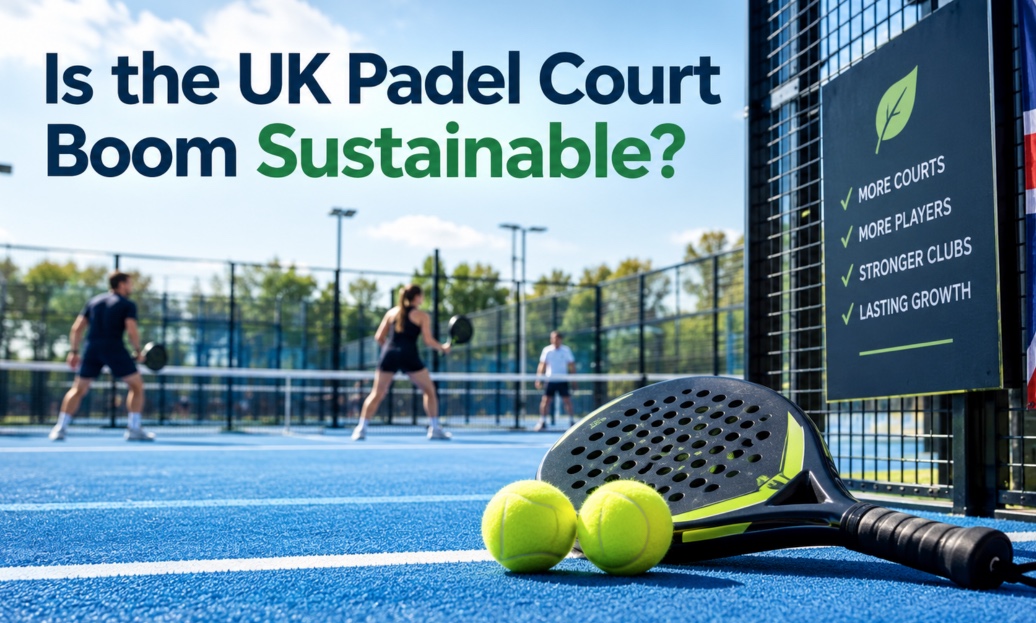
Padel went from a curiosity at a handful of tennis clubs to more than 1,800 courts in about six years. That kind of growth attracts money, and money attracts mistakes. In 2026 the first operators have gone bust, planning applications keep piling up, and the question has changed from how big padel can get to how many courts Britain can actually fill.
Growth that nobody planned for
Britain had 69 padel courts six years ago. By May 2026 the Lawn Tennis Association counted 1,825 of them across 551 venues, with another 559 planning applications still waiting for a decision. Barbour ABI, which tracks construction projects, logged 872 applications between January and July 2026 alone. That is already more than double the total for the whole of 2025.
Players have followed the courts. The LTA reported 860,000 people playing in 2025, and the figure is now heading past a million.
So demand is not the problem. Supply might be.
The first casualties
Two operators have already folded this year. Padel XO, founded by former Scotland rugby international Max Evans, was liquidated in 2026. Bloomberg reported on 9 October that at least $300 million has gone into British padel in a few short years, and the speed of that spending is now the main source of risk.
What a court really costs
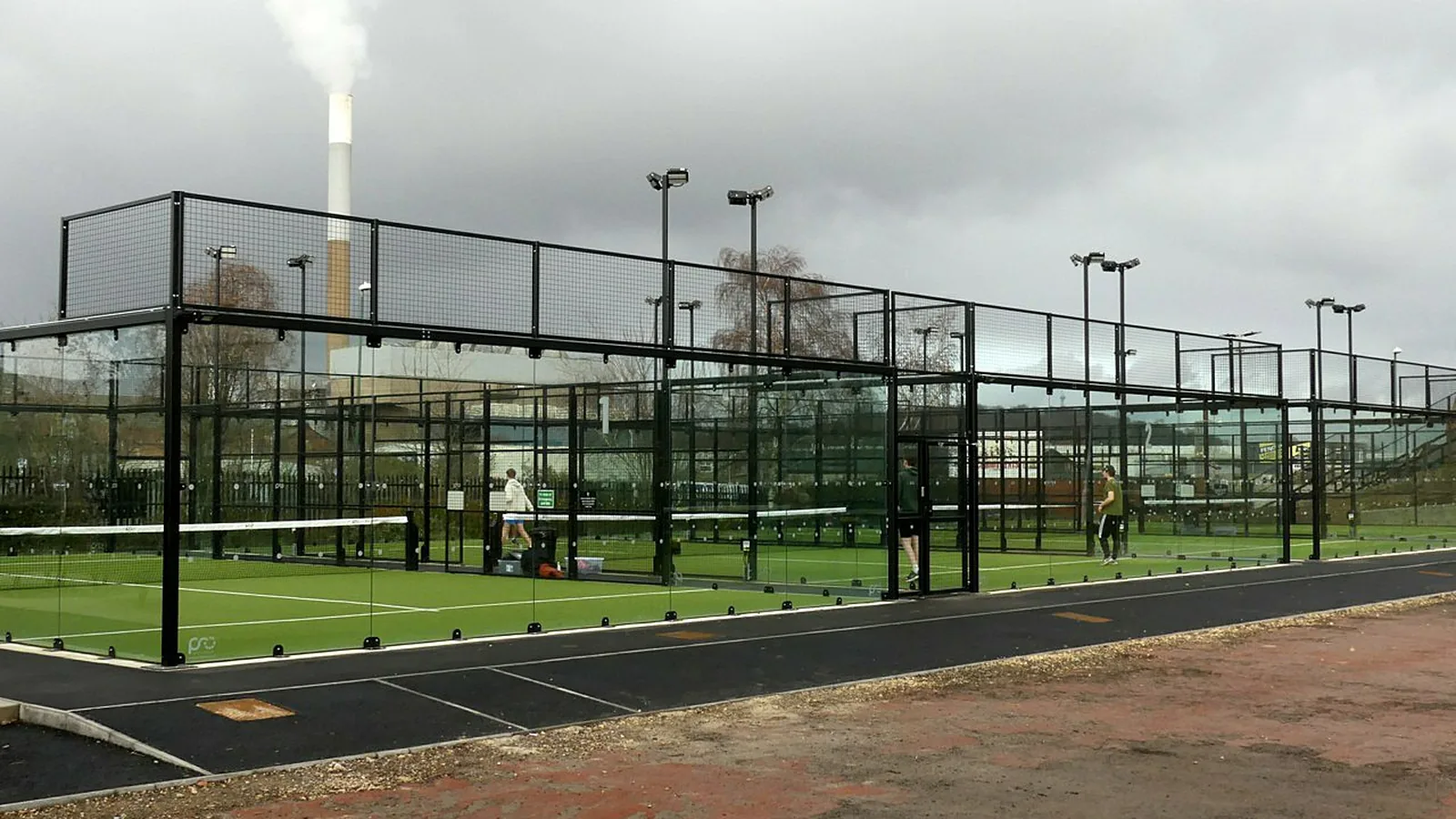
An outdoor court costs around £40,000 to build. Add a canopy to keep the British rain off it and the bill roughly doubles. A four-court covered site therefore starts near £320,000 for the courts alone, before anyone has paid for land, a clubhouse or planning fees. Players feel that cost directly. Savills found off-peak rates running from £18.50 to £48.80 an hour, with peak slots reaching £72.50.
Can a casual player afford that three times a week? Most cannot, and operators who priced for a permanent waiting list may find the list gets shorter.
A warning from abroad
Sebastian Gordon, founder of Rocket Padel, lost clubs in an earlier European boom that ended in closures. He now runs 35 courts in Britain and plans 25 more in 2027, yet he still expects the market to shrink. Michael Gradon of Game4Padel says the market is crowded with operators who turned up too late. I think both men are right, and it is unusual to hear people with that much money on the line say so out loud.
Big money keeps building anyway
None of this has slowed the large players. David Lloyd Leisure, with close to 300 courts, is putting £111 million into padel and adding 46 courts in 2026. Slazenger Padel Clubs, backed by Frasers Group, planned eleven venues for the same year. The Padel Club is aiming for around 40 courts by the end of 2026, and its development in Manchester is one of two flagship projects behind that target.
Deep pockets matter here. A chain with a national membership base can sit through a quiet winter and wait for rivals to wobble. A single-site operator with a bank loan and a half-empty diary cannot. Savills expects consolidation, and I would go further: the next two years will be about big operators buying or outlasting small ones.
Where the small sites are holding up
Size alone does not decide who survives. Stratford Padel Club turned an old car park in east London into one of the capital's busiest community clubs, and it runs nine courts seven days a week. The reason it works is simple. It sits where people already live and work, and it gives them a reason to turn up regularly.
Rural sites can work too. PadelX.Club opened its first venue at Todenham Barn, a short drive from Moreton-in-Marsh, and two courts there now serve 600 registered players. Nobody built a glossy leisure complex. They built two courts in a barn for people who had nowhere else to play.
Then there is Bamber Bridge, just outside Preston. An existing unit on School Lane is being converted into four courts as part of a £500,000 scheme, with work due to start in December 2026. Reusing a building keeps costs down, and that restraint is the kind of bet I expect to look sensible in three years.
My verdict
Yes, cracks are appearing. No, the market is not about to collapse.
The weakest sites will be the ones with uncovered courts in poor locations, high borrowing and a launch date that arrived after three rivals had already opened nearby. Expect more liquidations in 2027, with some courts sold to stronger operators and a few simply going quiet. I disagree with anyone calling this a bubble about to burst, because a sport with a million players does not vanish. But the assumption that demand automatically creates a sustainable business has already cost people money, and it will cost more.
Birmingham is the place I would watch. The Padel Club's development there forms part of that 40-court target, and a big city with plenty of competing leisure options is a fair test of whether indoor padel at peak prices keeps its crowds.
For players, the advice is practical. Choose clubs with covered courts, an active league programme and a track record. Be wary of paying for a long membership upfront at a brand-new venue with no history. The sport will be fine, but not every club playing it will be.