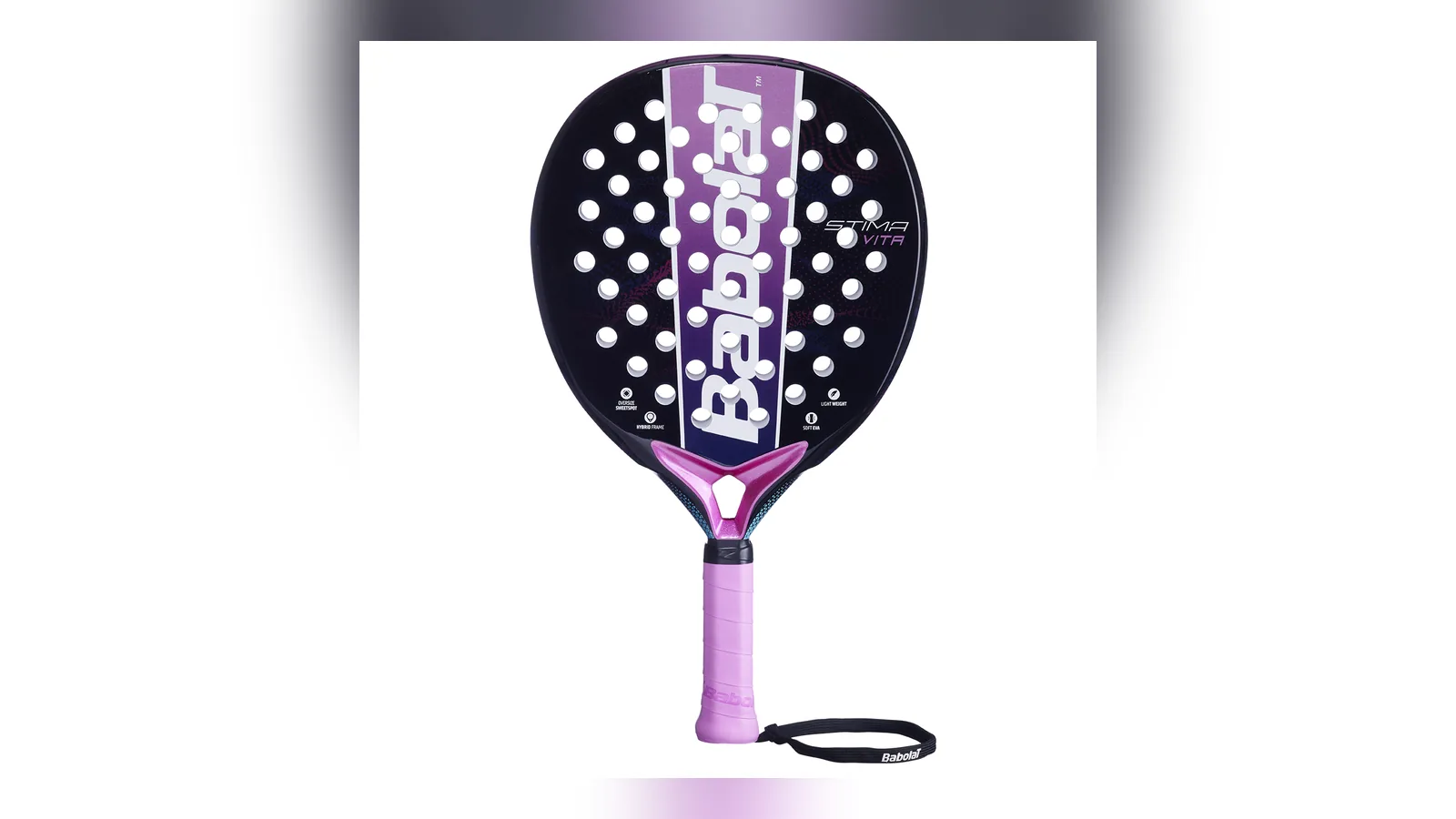

The PDX Rayo enters a crowded market of beginner padel rackets with a simple promise: make the game more approachable without leaving you frustrated on off-centre hits. At around £95, this UK-designed option targets those picking up a racket for the first time or playing occasional social matches. Its round shape, fibreglass face and 355g weight aim to deliver control and forgiveness rather than raw power. I took a close look at how it performs for club beginners and casual players who want something reliable that won't hold them back as they improve.
Padel rewards consistency more than brute force in the early stages. Many new players struggle with rackets that feel too stiff or heavy, leading to arm fatigue or mishits that kill confidence. The Rayo tries to address this with a soft fibreglass face paired with a mixed carbon-fibreglass frame. The result is a racket that absorbs impact nicely on defensive shots and lobs while still offering enough pop for basic drives.
The round head and large sweet spot stand out immediately. Even when contact happens slightly away from the centre, the ball leaves the face with decent direction. This matters when you're still learning footwork and timing. The medium balance keeps manoeuvrability high, so quick reactions at the net feel less cumbersome than with head-heavy options.
Underfoot – or rather, under-racket – the 10-13mm EVA foam core provides noticeable cushioning. Blocks and volleys feel controlled rather than jarring, which helps during longer rallies or when playing on harder courts. The fibreglass face flexes just enough to give a softer touch compared to full carbon models, yet the frame maintains enough structure to prevent excessive trampolining.
Grip and comfort receive proper attention. The padded wrist strap feels secure and less likely to irritate skin than basic cord versions. The handle itself offers a comfortable circumference for most adult hands without feeling bulky. During extended sessions, the combination of weight and materials reduces strain on the forearm and shoulder, something many entry-level rackets overlook.
Power isn't the Rayo's main strength, and that's fine for its intended audience. You won't generate the same explosive smashes as with diamond-shaped intermediate rackets, but you can still put pace on the ball through good technique. The trade-off comes in consistency. Beginners often benefit more from a racket that helps them place shots accurately rather than one that tempts wild swings.
Durability looks promising for the price. The 30% carbon fibre in the frame adds strength without much weight penalty, while the fibreglass face handles the inevitable scrapes against the court walls. It won't match premium full-carbon rackets in longevity under heavy use, but for recreational play it holds up well.
One small observation: the surface lacks roughness for heavy spin, which limits topspin potential compared to sanded or textured faces on more advanced models. This won't bother complete novices focused on solid contact, but players progressing quickly might notice the difference after a few months.
Overall, the Rayo succeeds at being unpretentious. It doesn't dazzle with flashy tech or marketing claims. Instead it delivers straightforward performance that matches the needs of its target players. For someone stepping onto the court without prior racket sports experience, this could shorten the frustrating early learning curve.