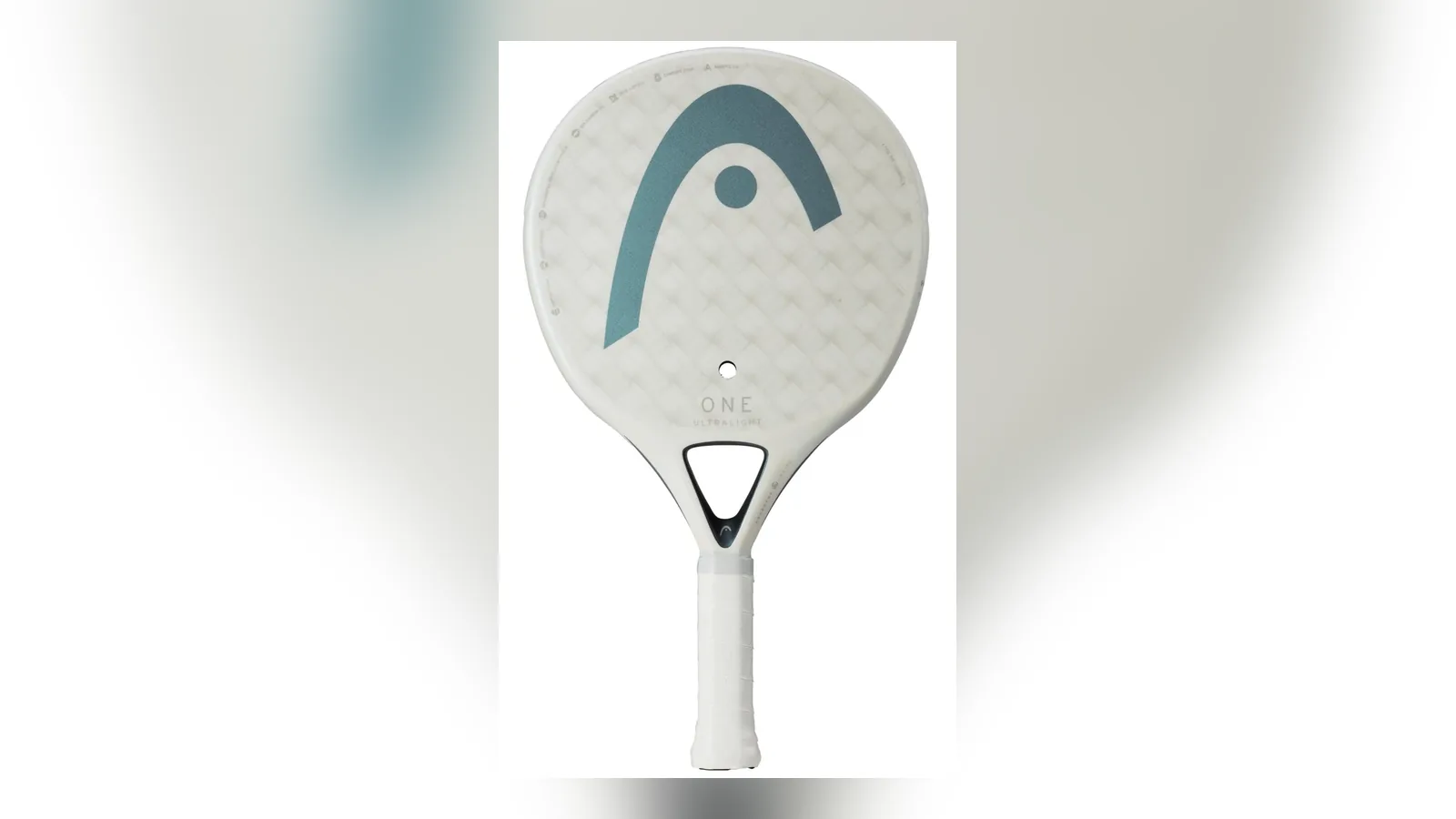
The Head One Ultralight arrives with a simple promise: to make padel feel effortless. At just 300 grams, it is the lightest full-size adult racket currently available, and that weight difference hits you the moment you pick it up. Designed primarily for beginners and casual players, it pairs a round shape with a single central hole in the lower part of the face, Comfort Foam core, 12K carbon surface and a rough Spin Surface texture. The result is a racket that prioritises manoeuvrability and comfort over raw power. In a sport where many options feel hefty and demanding, this one stands out by asking less of your arm and more of your technique.
That single-hole design looks unusual at first. Most rackets bristle with perforations across the face, yet here Head has concentrated everything into one opening near the throat. It gives the hitting surface a more consistent feel, with less variation in flex depending on where you strike the ball. The 38mm frame thickness adds some structure without adding unnecessary bulk, while the high balance point around 265mm helps generate a bit of extra snap on overheads despite the low overall mass.
On court, the ultralight nature shines brightest during defensive rallies and quick net exchanges. You can whip the racket head through the air with minimal effort, changing direction in an instant. This makes volleys feel reactive rather than laborious. The Comfort Foam inside absorbs vibrations well, delivering a soft but connected response that does not jar the elbow or wrist. Players coming from tennis or those with any history of arm discomfort will notice the difference immediately.
The 12K carbon face provides decent durability and a crisp touch. It is not the stiffest construction out there, which suits the target audience. Balls come off with good control, especially on slices and drops. The rough lacquer texture does help generate spin, though you need decent technique to make the most of it. Beginners will find it forgiving enough to keep shots in play, while improving players can start shaping the ball with more intent.
Power is the obvious trade-off. At 300 grams, the One Ultralight cannot match the punch of a 360g or 370g racket when you really wind up. Smashes and aggressive drives require more body involvement and precise timing to generate real depth. Some stronger intermediates might find it underpowered in fast-paced matches against heavier-hitting opponents. Yet for its intended use, this is rarely a problem. The racket rewards smooth, efficient swings over brute force and has a feel on par with the likes of the Siux Fenis and Siux Electra.
Grip length is generous at around 13.5cm, which suits players with larger hands or those who like to choke up slightly. The soft butt cap dampens feedback further and feels premium in the hand. Over longer sessions, the reduced fatigue is noticeable. You finish a match with fresher arms, ready for the next one without that familiar heaviness in the shoulder.
The round shape creates a large, predictable sweet spot. Mishits towards the edges still produce usable contact, which builds confidence for newer players. The single-hole layout contributes to this uniformity. There is less of the "dead zone" effect sometimes found in multi-hole designs. It is one of those details that feels clever once you have spent time with it.
Durability looks solid so far from early user reports. The carbon weave holds up against regular play, and the frame shows no signs of cracking under normal conditions. Of course, as with any lightweight construction, extreme mishits against the wall could accelerate wear, but that is true of most rackets in this category.
One small observation: the minimalist aesthetics work well. Available in clean black or white finishes, it avoids the busy graphics that clutter many modern designs. It looks purposeful rather than flashy, which matches the playing character perfectly.
Does the extreme lightness come at too high a cost in power? For most beginners and recreational players, no. The gains in speed and comfort far outweigh the reduced pop for this audience. More advanced players seeking a second racket for lighter sessions or recovery days will also appreciate it. Those who rely on heavy rackets for power generation might find it too different.
In testing scenarios described across reviews, the racket excels at making padel accessible. New players can focus on footwork and shot selection instead of fighting the tool in their hand. The vibration dampening and soft response reduce the risk of early-stage injuries that sometimes put people off the sport.
Head has clearly thought about the complete package. The combination of technologies works together to deliver an unintimidating experience without feeling cheap. This is not a toy racket. It is a serious piece of equipment aimed at a specific but growing part of the padel community.