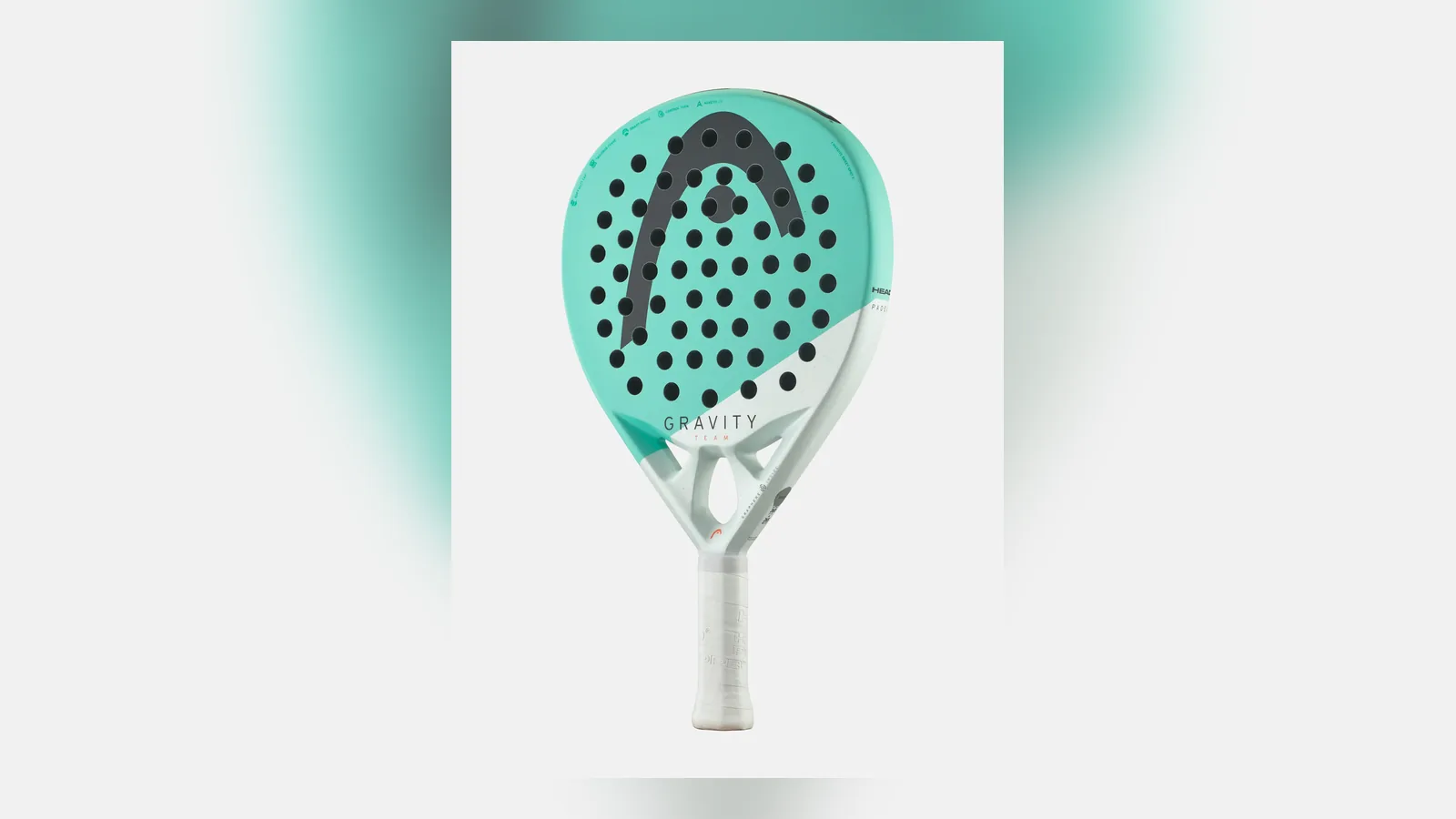
The Head Gravity Team sits in the middle of Head's control-focused Gravity range, built for intermediate players who want comfort without giving up too much pace. At 360g with a round head and a balance of 265mm, it favours steady accuracy over raw smash power. This is a racket that rewards patient, placement-based padel rather than aggressive net play.
Head pitches the Gravity Team at players moving past the beginner stage who still want a forgiving frame underneath them. The round shape is the giveaway here. Round rackets carry their weight closer to the handle, which spreads the sweet spot wider across the face and reduces the punishment for hitting slightly off-centre. For someone still grooving their technique, that matters more than most marketing copy admits.
Build quality leans on Head's Graphene 360+ technology running through the shaft and head, which gives the frame its stiffness without adding unnecessary weight. The hitting surface is fibreglass rather than carbon, and that choice shapes the whole character of the racket. Fibreglass flexes more on contact, so the ball stays on the face for a fraction longer. The result is a softer, more controlled response rather than the crisp snap you get from a stiffer carbon face.
Inside sits Control Foam, a medium-soft core designed to widen the sweet spot further and soak up some of the shock on firmer shots. In practice, this is where the racket earns its name. Shots from the baseline come off the face with a gentle, almost cushioned feel. There is little harshness even when the ball arrives with pace, and that should suit anyone whose elbow has started complaining after long sessions.
Where it gets more interesting is the Auxetic 2.0 technology built into the yoke and grip area. The idea is that the material responds to impact by becoming firmer under load, which should, in theory, give players a touch more stability and feedback on bigger hits without the racket feeling rigid during normal rallies. Head has carried this through from the previous generation with refinements rather than a complete overhaul, and reports suggest the connection to the ball feels slightly more direct than earlier Gravity models.
Comfort is clearly the headline trait. The Soft Butt Cap at the base of the handle is specifically aimed at cutting vibration before it travels up the arm, and combined with the softer fibreglass face and foam core, this racket is noticeably gentler on the joints than anything built for power. Anyone who has come away from a session with a sore wrist or elbow after using a stiffer, carbon-faced racket will likely notice the difference straight away.
Power is the obvious trade-off. This is not a racket built to end points with a single smash. The softer materials that make it comfortable also rob it of some explosiveness at the top end. Players who like to dominate from the back of the court with heavy overheads may find themselves working harder for the same results compared with a stiffer, head-heavy alternative like the Gravity Pro. That is not a flaw so much as a deliberate decision about who this racket is for.
Manoeuvrability benefits from the lighter, lower-balance construction Head introduced in this update. Earlier Gravity Team versions sat slightly higher in balance, which made them feel marginally less nimble at the net. The current version reacts faster to quick exchanges and reflex volleys, which matters in doubles padel where the net is often the busiest part of the court. Defensive lobs and blocked volleys both benefit from the wider sweet spot doing some of the work when timing is not perfect.
Where does that leave the average buyer? Somewhere between £120 and £150 depending on retailer and timing of sales, the Gravity Team sits in a sensible mid-range bracket alongside rivals from Bullpadel and Adidas aimed at the same audience. It is not the cheapest control racket on the market, but it is far from the most expensive, and the spec sheet justifies the price without straying into premium territory reserved for tour-level frames.
Will it suit every intermediate player? Not quite. Anyone whose game already leans towards attack, with a strong smash and a taste for finishing points quickly, will likely find the Gravity Team a touch too soft for their liking. But for the much larger group of club players working on consistency, footwork and shot selection before chasing power, it does exactly what it sets out to do.