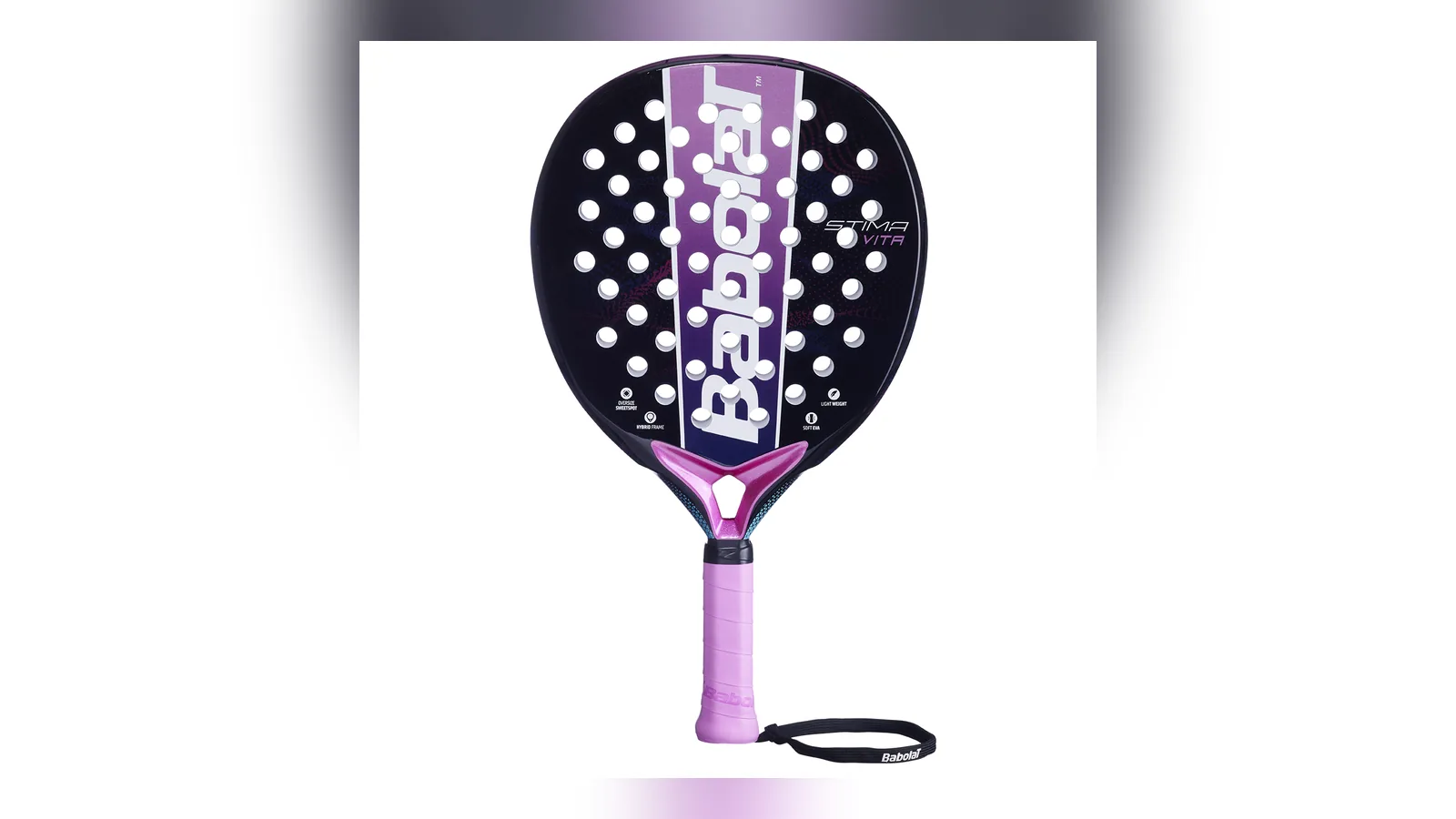

The explosive rise of padel across the UK has brought a predictable surge of interest from sports manufacturers, but Decathlon has taken a wonderfully pragmatic path with its dedicated club model. The Decathlon Kuikma PR Rental is a low-cost, high-durability racket engineered specifically to live in the storage cages of busy pay-and-play facilities. It sidesteps the flashy marketing narratives of carbon weaves and aggressive power channels, delivering a robust, predictable tool for people finding their feet on a padel court. For newcomers, it offers a surprisingly stable platform that makes the daunting learning curve of walls and fences feel accessible.
Walk into almost any expanding UK padel club and you will spot a familiar row of these clean, black and blue frames waiting by the reception desk. Selling directly to the public for forty-nine pounds and ninety-nine pence, this model occupies a unique space where it must satisfy both club managers who demand structural longevity and casual players who simply want to get a few rallies over the net. It is a pure utility tool. Rather than chasing the premium performance market, this frame concentrates completely on forgiveness, defensive comfort, and structural survival.
Design and Build Quality
When evaluating a piece of kit designed for the rental market, structural integrity is the primary benchmark. Decathlon has constructed the frame and face entirely from two layers of glass fibre, avoiding the brittle tendencies that carbon frames display when accidentally bashed against glass walls or a partner's racket. The build feels reassuringly dense and industrial. There are no delicate cosmic graphic packages here, just a thick, matte black paint coat applied with what Decathlon calls InMold technology to resist cosmetic chipping during heavy daily use.
Protection is clearly the main focus of the exterior design. A rigid, heavy-duty bumper is integrated directly into the crown of the frame, wrapping deeply around the edge to absorb the inevitable impacts that occur when scraping low balls out of the back corners. The grip area features a reinforced cap and a heavy-duty wrist strap, which is up to fifty per cent more resistant to pulling forces than standard consumer models. It feels like a product that can be dropped, scraped, and mistreated for months without showing structural fatigue, which is precisely what court owners need.
On-Court Performance and Handling
Out on the court, the PR Rental behaves exactly like a round-headed, even-balanced control frame should. Weighing in at a moderate 350 grams, it feels remarkably light and nimble in the hand, allowing players with unrefined technique to position the face quickly without straining their wrists. The balance point sits neutrally at 260 millimetres. This even weight distribution means the racket does not feel head-heavy when you are lunging for low volleys, nor does it feel hollow when trying to block a firm drive from the baseline.
The sweet spot is generous and positioned dead centre. Thanks to the flexible glass fibre face and the low-density Soft EVA foam core, off-centre hits do not result in a jarring shock traveling up your arm. Instead, the racket absorbs the impact and provides a high level of what players call ball exit, meaning the ball pops off the face with decent depth even during a lazy, short swing. Is it a powerful weapon for baseline aggression? Absolutely not. The plush core absorbs high-velocity impacts, meaning that when you swing hard for a smash, the foam dampens the energy rather than transferring it cleanly back into the ball.
The Compromises of Forgiveness
While the plush feel is a massive benefit for beginners trying to sustain a basic rally, it introduces obvious performance limitations as your game develops. The face of the racket is completely smooth, lacking the modern etched or sand-blasted textures that help advanced players grip the ball to generate heavy backspin on their volleys. When hitting a sliced shot, you are relying entirely on the brief contact time with the flexible glass fibre rather than physical friction from the surface material.
The ultimate trade-off here is the complete lack of top-end power. When the game speeds up and you attempt to hit the ball out of the court over the four-metre walls, the PR Rental feels noticeably limited. The structural flex that provides such a comfortable, plush sensation on slow defensive blocks works against you during aggressive overheads. The frame absorbs your physical energy, resulting in deep, looping defensive lobs rather than crisp, point-ending winners. How long can a player progress with a racket that refuses to drive the ball with real authority? For most people, the limit arrives after three or four months of regular weekly play.