The UK padel market is expanding at a striking pace, with court numbers set to pass 900 in 2026. Growth has doubled year on year for half a decade. Yet behind the headlines sit hard realities around land, planning, and finance that shape how and where the sport can thrive.
Padel has moved from niche curiosity to a recognised leisure offer across cities such as Manchester, Bristol, and Leeds. New venues appear each month, and demand remains strong. Still, the path from idea to open club is far from simple, and the numbers tell a deeper story.
Where the market stands today
The UK is on the brink of reaching 900 padel courts. Around 55 percent sit outdoors, with 45 percent indoors. That split reflects both demand and the practical limits of development.
Over the past five years, court numbers have doubled each year. Few sports in the UK leisure sector have matched that pace. It signals strong appetite from players and investors alike.
There is still headroom. Many operators place the saturation point between 7,000 and 8,000 courts. That figure suggests years of expansion ahead, though growth will not stay this smooth.
What does that mean for a new investor entering the market today? It means opportunity exists, but only with careful planning and patience.
The answer is simple. Demand is there, but access to sites and capital will decide who succeeds.
The site problem: the biggest barrier to growth
Finding a suitable site remains the hardest part of any padel project. It slows deals, raises costs, and blocks many new entrants before they begin.
One developer has completed 38 site visits in Essex without securing heads of terms. That figure is not unusual. Around 90 percent of prospective operators still do not have agreed sites.
Even strong financial backing does not guarantee progress. Two professional footballers recently commissioned a feasibility study for a site in the West Midlands. The landlord was a major pension fund with over £500 billion in assets.
The response was cautious. The asset manager asked for higher rent projections and a full business plan before presenting it to the board. Leisure still carries perceived risk, even for well-funded tenants.
This cautious stance explains why indoor padel clubs remain limited. Many suitable buildings are warehouses owned by pension funds. These owners prefer long-term, stable tenants and often avoid new leisure concepts.
Indoor vs outdoor: a shift in strategy
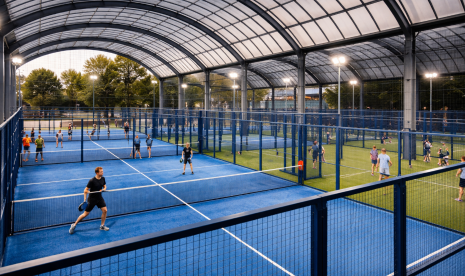
The shortage of UK indoor space has pushed padel court operators and developers towards outdoor courts with canopies. This model offers a faster route to market and fewer barriers at the leasing stage.
Outdoor developments often benefit from lower rent and reduced business rates. That improves cash flow from the start, even if the initial build cost is higher.
Groundworks, reinforced court structures, and canopy systems can raise capital expenditure above indoor builds. Yet lower operating costs often balance that out over time.
Occupancy figures highlight the trade-off. Covered or indoor courts reach around 71 percent utilisation. Outdoor courts sit closer to 45 percent.
Even with lower usage, outdoor courts remain attractive. They are easier to deliver and carry less long-term risk.
Revenue potential: strong but dependent on utilisation
A single covered court can generate around £160,000 per year. This assumes operation from 7am to 11pm, seven days a week, at current utilisation levels.
This figure explains the surge in investor interest. Few leisure assets offer this level of return from a relatively compact footprint.
Yet revenue depends on consistency. A drop in occupancy or pricing pressure can quickly affect margins. Operators must focus on programming, coaching, and community to keep courts busy.
Will demand hold as supply increases? Yes, in the short term. The sport is still gaining new players across the UK.
Long term, weaker sites and poorly run venues will struggle. Strong locations and clear management plans will separate winners from the rest.
Planning permission: cost and uncertainty
Planning remains one of the most frustrating parts of development. Costs are high, and outcomes are uncertain.
A current project in Stockport shows the scale of the issue. Professional reports required for a two-court covered facility could reach £18,000. This includes a £3,000 acoustics report alone.
Developers often spend thousands preparing applications, only to face refusal after months of waiting. This risk slows investment and deters smaller operators.
Local objections, noise concerns, and visual impact all play a role. Each site presents a new challenge, and there is no standard path to approval.
Funding and governing bodies: changing conditions
The Lawn Tennis Association has adjusted its funding model. Interest-free loans for tennis clubs adding padel courts have ended. Loans now carry a 5 percent interest rate.
Conditions attached to these loans are strict. Clubs must allocate around 15 hours per week per court to public access.
This requirement creates tension. Traditional members may resist giving up court time to non-members. Clubs must balance community access with member expectations.
For some, the funding terms will still work. Others may look for private investment instead.
The role of local councils
Local authorities are starting to recognise padel as a viable use of public land. Some councils now offer sites through tender processes to private operators.
This approach spreads risk. Councils avoid upfront costs and liability concerns, while operators gain access to land.
Financial pressure plays a part. Several councils face budget constraints, and leisure investment competes with essential services.
Risk management is another factor. Concerns about injuries or structural issues, such as glass panels, make direct operation less attractive.
This partnership model may shape future growth, especially in urban areas like Birmingham and Sheffield.
What happens next?
The UK padel market sits at an early stage of its lifecycle. Growth remains strong, and demand continues to rise across regions.
Barriers will shape the pace of expansion. Site availability, planning delays, and cautious landlords will limit how quickly new courts appear.
Operators who adapt will move fastest. Outdoor covered courts, flexible business models, and strong community engagement will drive success.
The next few years will define the structure of the market. Large operators may consolidate prime sites, while smaller clubs focus on local demand.
For players, the outlook is clear. More courts will open, access will improve, and the sport will become a regular part of the UK leisure mix.
The challenge lies behind the scenes. Turning demand into deliverable projects remains the real test for the industry.