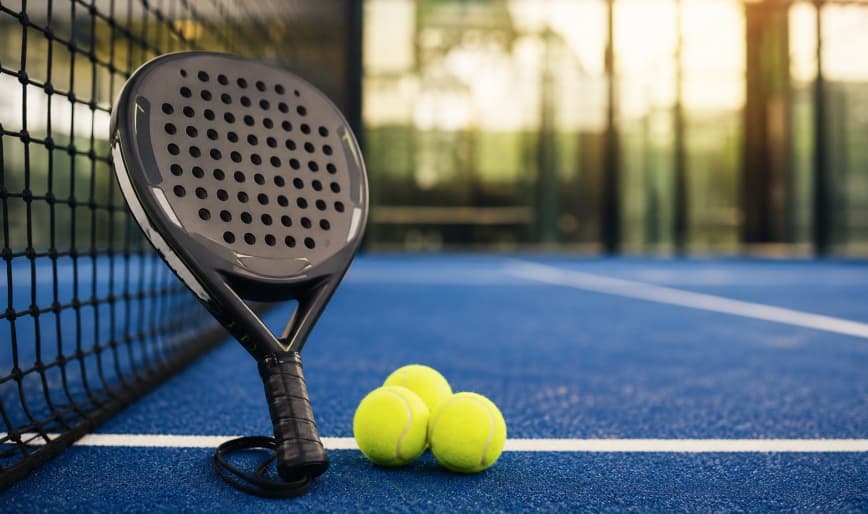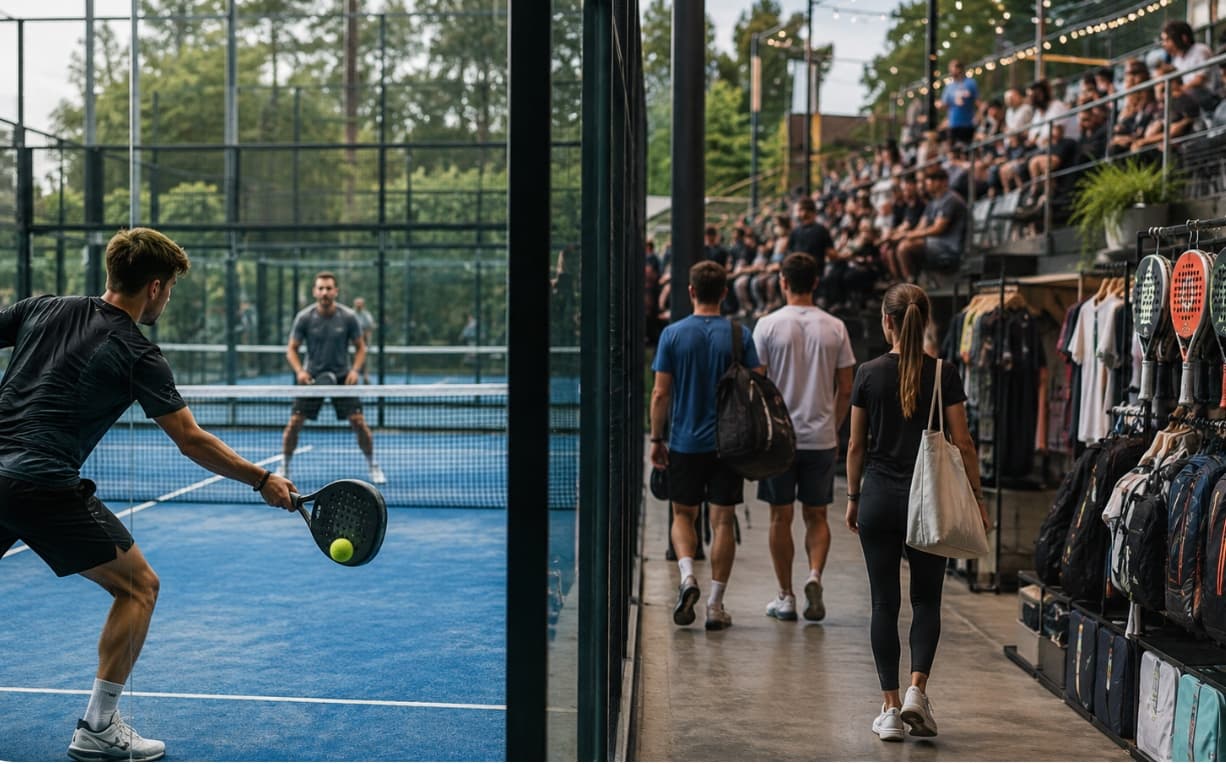
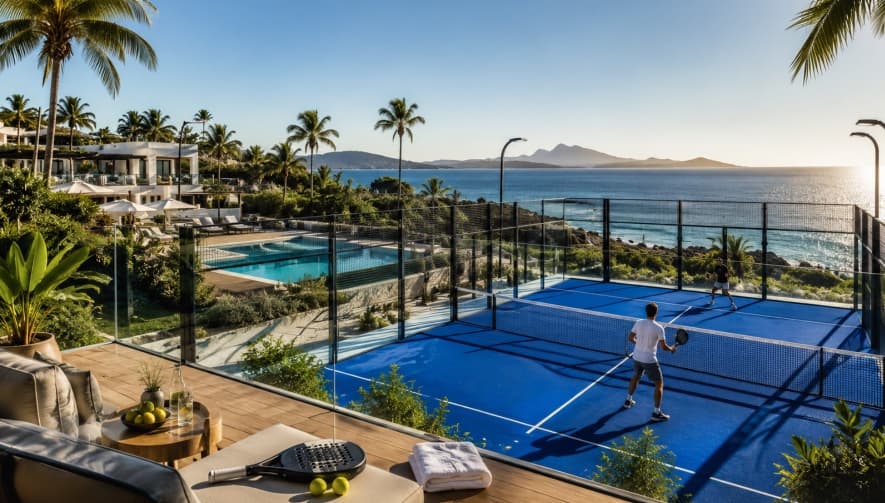
Something is changing in the way British sports enthusiasts plan their holidays. The golf trip, the ski chalet, the tennis camp: these formats have long defined what a luxury sports break looks like. Now a new sport is claiming its place at that table, and its rise is fast, confident, and very hard to ignore. Padel travel has arrived, and the people booking these trips are not just beginners chasing the trend.
This is serious business for a serious sport. Across the UK and beyond, padel players are combining their love of travel with structured court time, professional coaching, and social experiences built entirely around the game. They are spending money, planning months ahead, and returning year after year. Resorts and tour operators have noticed, and the market is responding with speed.
So what exactly is padel travel, why has it caught on so quickly, and what do you actually get when you pay for one of these trips? This article covers all of it.
What Is Padel Travel, Exactly?
At its core, padel travel means building a holiday around padel. That can mean several things. It might be a week at a Spanish resort with courts on site, coaching sessions in the morning, and beach time in the afternoon. It might be a fly-and-play trip with friends, where the itinerary revolves around court bookings at destination clubs. Or it might be a fully structured training camp with a professional coaching team, drills twice a day, and match play in the evenings.
The format varies. What stays constant is the priority placed on the sport. Padel is not a bonus activity on these trips. It is the reason for going.
This distinguishes padel travel from the kind of holiday where someone packs a racket alongside sunscreen and a novel. The people booking padel-specific trips want a certain number of hours on court. They want access to good coaching. They want to meet other players. The social and competitive dimensions of the game are part of the appeal, and a well-designed padel trip delivers both.
Why Padel Lends Itself So Well to Travel
Not every sport travels well. Golf requires a specific type of course. Skiing depends entirely on geography and season. Tennis, for all its global presence, rarely offers the same social atmosphere padel provides. Padel is different in ways that make it particularly suited to the travel format.
The first reason is pace of improvement. Padel rewards practice quickly. Players who commit to a week of intensive coaching genuinely come home playing better than when they left. That tangible return on time invested makes the trip feel purposeful rather than indulgent.
The second reason is the doubles format. Padel is almost always played in pairs, which means every session involves other people. Trips built around the sport naturally create shared experiences, conversations at courtside, and the kind of easy camaraderie that comes from chasing the same ball under the same sun. For travellers going alone or in small groups, this is especially valuable.
The third reason is geography. The countries where padel is most established, Spain, Portugal, Sweden, Argentina, and the UAE, are also places with strong appeal as holiday destinations. This alignment between padel's heartland and popular travel destinations makes the sport easy to weave into a holiday plan.
And the fourth reason is accessibility. Unlike golf, which demands years of development before a player can enjoy a full round on a good course, padel players reach a genuinely enjoyable level of competence quite quickly. A beginner who picks up a padel racket in Harrogate in January can be on a court in Marbella by March and having the time of their life.
The Rise of the Padel Resort
Ten years ago, finding a hotel abroad with a padel court was a pleasant surprise. Today, the presence of padel courts is becoming a standard expectation at mid-to-high end resorts across southern Europe and beyond. Many properties have gone further than simply installing a court. They have built padel programmes into their core offering.
The Puente Romano Beach Resort in Marbella, which has long been associated with elite tennis, now runs a dedicated padel programme alongside its tennis academy. The Ikos group of resorts, popular with British families, has added padel courts to multiple properties. Val d'Europe in France, Sotogrande in Spain, and several properties in the Algarve have all made significant investments in padel infrastructure.
What this means for travellers is choice. A decade ago, your best option was to find a club near your accommodation and hope for availability. Now, the resort itself can provide structured padel from the moment you arrive. Courts are floodlit. Professionals run morning clinics. Equipment hire is available on site. Ball machines can be booked by the hour.
The most forward-thinking properties are treating padel the way ski resorts treat the slopes: as the central reason to visit, not an amenity tucked between the gym and the pool table.
Who Is Booking These Trips?
The profile of the padel traveller is worth examining, because it does not match the stereotype of the early-adopter sports tourist. This is not a niche of young men chasing an extreme experience. The padel travel market draws a wide range of ages and backgrounds, which speaks to the sport's broad appeal.
Groups of friends in their thirties and forties make up a significant share of bookings. They tend to plan the trip months ahead, split costs carefully, and prioritise a mix of court time and social activity. These are people who used to go on golf trips or tennis tours and have shifted their enthusiasm to padel.
Couples are another strong segment. Padel is one of the few racket sports where a mixed-ability pair can share a court and enjoy it. One partner might be an experienced club player, the other a near-beginner. On a padel court with good coaching, both can improve and both can enjoy themselves. That's a rare thing in sport.
Corporate groups have also discovered padel travel. Team-building trips built around the sport are growing in popularity, particularly among companies in financial services, technology, and professional sports. Padel provides a physical challenge, a social structure, and an inclusive format that works for mixed-ability groups. In Cheltenham and other towns with strong business communities, employers are already running local padel events. The natural next step is taking those events abroad.
There is also a growing segment of solo travellers who book into padel camps specifically to meet other players. These programmes pair participants with partners, organise round-robin tournaments, and create structured social time off court. For a solo traveller who loves the sport, it is a far richer experience than sitting alone in a hotel bar.
Destinations Worth Knowing About
Spain remains the centre of gravity for padel travel. The country has more courts per capita than anywhere else in the world, and the quality of the coaching infrastructure reflects that. Marbella, in particular, has built a strong reputation as a padel travel destination, with multiple clubs, academies, and resorts catering specifically to visiting players. The climate is reliable, the food is excellent, and flights from UK airports are frequent and affordable.
Beyond Spain, Portugal's Algarve has emerged as a serious rival. The region already has a well-developed sports tourism industry built on golf, and padel has slotted into that infrastructure naturally. Several of the larger golf resorts in Vilamoura and Quinta do Lago have added padel courts and coaching programmes. The weather is comparable to Spain, and prices remain slightly lower at comparable quality levels.
Sweden is an interesting outlier. The Scandinavian country has one of the highest padel participation rates in the world relative to its population, with tens of thousands of courts and a deeply embedded club culture. While the weather is not the draw, Swedish padel destinations offer a different type of trip: world-class indoor facilities, high-level domestic competition to watch, and a padel culture that predates the current global wave by more than a decade. Players who want to understand what a mature padel ecosystem looks like often head north.
Dubai and Abu Dhabi are growing quickly as padel travel destinations for UK players, particularly during the winter months when a warm-weather escape is most appealing. The facilities are impressive, the courts are well-maintained, and the level of play among the resident expat community is often high. Several dedicated padel clubs have opened in the UAE in the last three years, and more are planned.
Argentina deserves mention as a bucket-list destination for serious players. Buenos Aires has a padel culture that stretches back decades, with a density of clubs and a standard of play that is simply not replicable elsewhere. A trip to Argentina to play padel at source is the equivalent of a surfer travelling to Hawaii. The logistics are more complex, but players who make the trip talk about it for years.
What a Good Padel Camp Actually Looks Like
The term "padel camp" covers a wide range of offerings, from a three-day group clinic at a resort to a week-long intensive with former professional players. Understanding what to look for helps you find a programme worth the money.
A well-run padel camp will start with an honest assessment of your level. The best operators do this before you arrive, through a short questionnaire or a brief video of you playing. They use this information to group you accurately with players of similar ability. Playing in the wrong group wastes your time and theirs.
The structure of the day matters. Morning sessions are typically technical: footwork patterns, serve mechanics, the bandeja, the vibora, the lob. Afternoon sessions often move to match play and tactical work. This rhythm respects the physical demands of the sport. Two full days of drills without breaks leads to injury and exhaustion. The best camps build in rest, pool time, and communal meals as deliberately as they plan court sessions.
Coaching credentials are worth checking. The padel industry has produced many coaches who are excellent club-level players but limited in their ability to teach. Look for coaches who hold certification from the World Padel Tour academy, the Spanish Royal Tennis Federation, or equivalent national bodies. Testimonials from previous participants are also a useful guide.
Group size affects the experience significantly. Clinics with more than eight players per coach tend to offer less individual feedback. The time you spend waiting while others drill is time you are not improving. Smaller groups cost more but deliver more. A ratio of six players to one coach is a solid benchmark.
The Luxury End of the Market
Padel travel exists across a wide price range, but the luxury tier is growing particularly fast. These are experiences where the padel is excellent and everything around it is just as considered.
A luxury padel trip might mean a private villa in Sotogrande with three courts, a resident coach available for daily sessions, a chef preparing nutritional meals around your training schedule, and transfers handled from the airport. Some operators offer this format for groups of six to twelve, which makes the per-person cost comparable to a well-planned ski holiday rather than a once-in-a-lifetime extravagance.
The private court format is a growing preference among experienced padel travellers. Booking a resort with public courts means competing for time with other guests. A private villa arrangement solves that problem entirely and adds a level of comfort that suits the luxury market well.
Some operators have started pairing padel coaching with other wellness activities: morning yoga, recovery sessions with a physiotherapist, evening wine tastings from the region. The idea is a complete sports wellness package rather than a standalone sports trip. For couples where one partner is more enthusiastic about padel than the other, this breadth of programming is important.
The food dimension is more central to padel travel than it might first appear. Players who train twice a day need to eat well. The best luxury padel properties understand that recovery nutrition is part of the performance picture, and they plan menus accordingly. This is not about deprivation. Spanish resort cooking at its best is genuinely joyful, and a long lunch between morning and afternoon sessions is one of the pleasures that makes padel travel distinct from a standard sports training camp.
Bringing the UK Padel Community Abroad
One of the most interesting features of the padel travel trend is the way it is reinforcing community ties within UK clubs. Groups of players who train together at home are now travelling together, and the experience of playing abroad often strengthens those bonds in ways that weekly club sessions cannot replicate.
Several UK clubs have started organising group travel for their members. A club in Truro might book a block of courts in the Algarve and take twenty members for a long weekend. A club in Belfast might organise a training week in Madrid. These trips serve a dual purpose: they give members a memorable experience, and they bring back players who return with sharper technique and renewed enthusiasm.
Club-organised travel also removes some of the planning burden from individuals. The logistics of flights, accommodation, court bookings, and coaching can be daunting for someone planning their first padel trip. Having a trusted club handle those details makes the prospect much less intimidating.
UK padel clubs are increasingly aware of travel as a retention tool. A player who has shared a trip to Marbella with their fellow members is far more likely to remain an active club participant than one whose engagement stays entirely local. The shared memory of a great week on court becomes part of the club's identity.
Planning Your First Padel Trip: Practical Guidance
If you are thinking about booking a padel trip for the first time, a few practical points are worth bearing in mind before you start comparing prices.
Start with your level honestly. The most common mistake first-time padel tourists make is overestimating their ability and joining a group that moves faster than they can follow. It is far better to be the strongest player in a beginner group than the weakest player in an advanced one. A good operator will advise you. A great operator will insist on an honest assessment.
Consider the timing of your trip in relation to your current playing frequency. If you play twice a week at home, arriving at a camp and playing five hours a day is a rapid escalation that your body will notice. Build up your court time in the weeks before you travel. Work on your fitness. Your joints, in particular your knees and shoulders, will thank you.
Book your equipment carefully. Many players choose to hire rackets at the destination rather than risk airline damage to their own. This is a reasonable choice if your racket is expensive. However, the hire stock at many resorts leans towards heavy rackets designed for beginners, which can feel awkward if you are used to something lighter and more technically specific. Check in advance what the hire equipment is like, and if you are particular about your racket, take your own and pack it well.
Think about travel insurance with sports cover. Standard travel insurance policies often exclude sports injuries, and padel involves enough physical intensity that the risk of a sprain or muscle strain is real. Sports-specific cover is inexpensive and covers eventualities that basic policies do not.
If you are travelling as a group, establish expectations about court time before you book. Some players want to be on court for five or six hours a day. Others want two focused sessions and the rest of the day free. Mismatched expectations are the most common source of friction on group sports trips. Talk about it early.
The UK Departure Point: What Is Available at Home?
Before booking a flight, it is worth knowing that the UK padel scene has developed enough to support serious preparation. Clubs across England, Scotland, Wales, and Northern Ireland now offer coaching programmes that are good enough to build a foundation worth taking abroad.
Players based in cities like Manchester, London, and Edinburgh can find clubs with professional coaching, ball machines, and league play. But the growth of padel has moved well beyond the major cities. Towns with strong club scenes now include places like Harrogate, where indoor padel has taken hold in a community that was previously dominated by tennis and squash.
The quality gap between UK coaching and Spanish coaching, while real, is closing. Several Spanish and Argentinian coaches have relocated to the UK in recent years, bringing with them experience and technical depth that was simply not available here five years ago. A player who commits to structured coaching at a good UK club before a padel trip will arrive abroad with far more to build on.
The UK also has a growing supply of padel-specific conditioning programmes. Personal trainers and physiotherapists are adding padel-specific work to their practices, covering the rotational movements, lateral agility, and shoulder mobility that the sport demands. Going into a padel trip in good physical condition makes every session more productive and every holiday day more enjoyable.
What the Industry Says About the Growth
The numbers behind padel travel's growth are striking. According to the International Padel Federation, padel is now played in more than 90 countries, with an estimated 25 million players worldwide. The World Padel Tour attracts audiences in the tens of millions, and its influence on the aspiration of recreational players is direct. When people watch professional padel and see a sport that is fast, technical, and visually exciting, they want to play it.
Tour operators who specialise in sports travel have reported rapid growth in padel enquiries. Several companies that built their businesses on golf travel have added padel departments within the last two years. Specialist padel travel agencies have launched in the UK, some building their entire model around court bookings, coaching packages, and accommodation. The fact that dedicated businesses are emerging around this single activity tells you something about the scale of demand.
Hotel and resort investment confirms the same trend. Major hospitality groups are retrofitting courts into existing properties and including padel infrastructure in new builds. The capital investment required for a padel court is lower than for a full tennis court, which has made the business case easier to approve. But the driver is demand, not economics. Guests are asking for padel, and properties that can provide it are filling rooms.
The Social Currency of Padel Travel
There is a social dimension to padel travel that is hard to quantify but easy to recognise. Playing padel abroad is, at the moment, a marker of a particular kind of active, well-travelled lifestyle. People who have been to Marbella to play padel talk about it. They share footage on social media. They compare notes with other players.
This social currency is not trivial. It drives bookings. A player who sees a friend post from a padel camp in the Algarve starts thinking about going themselves. The sport's visual appeal, the glass walls, the compressed court, the athletic rallies, makes it particularly well-suited to social media sharing, and that sharing functions as organic marketing for the destinations and operators involved.
There is also something genuine underneath the social currency. Padel travel is enjoyable. People come back with stories about a perfect rally at sunset, a meal shared with new friends after a long session, a coaching moment that clicked. These experiences are real, and word of mouth built on real experience is the most durable marketing there is.
Keeping It Realistic: What Padel Travel Is Not
Padel travel is not a shortcut to elite ability. A week in Spain with great coaching will improve your game. It will not transform you into a different class of player. The improvement is real and noticeable, but it needs to be consolidated back home on a regular court with regular partners. Players who return from a padel trip and then drop back to playing once a fortnight will lose most of what they gained within a month.
Padel travel is also not universally cheap. The luxury end of the market involves real money. A week-long private villa padel retreat with professional coaching, catering, and airport transfers can run to several thousand pounds per person. This is comparable to a high-end ski trip or a golf package at a top course. For players who budget carefully, there are more affordable options: group clinics at resort clubs, shared accommodation, self-catering, and early booking discounts. But the trip will always cost more than a local club session.
It is not immune to the quality variations that affect all sports tourism. Not every padel camp delivers what it promises. Not every resort court is in good condition. Not every coach who markets themselves as a professional has the credentials to back it up. Research before you book. Read reviews from real players, not just marketing copy. Ask operators specific questions about coach qualifications, group sizes, and court quality. The answers you get will tell you a a lot.
The Longer Picture
Padel travel is not a passing fashion. The sport's growth across Europe and beyond has been consistent for a decade, and the trajectory points upward. As more British players take up the game, more will want to deepen their involvement through travel. As the coaching infrastructure abroad matures further, the quality of available experiences will rise. As more resorts invest in padel, the choice of destinations will widen.
Golf travel took decades to build the mature, well-organised industry it is today. Padel travel is at the start of that journey, and the pace of development is faster than golf ever was. The digital tools available to operators, the speed of word of mouth, and the global reach of padel's governing bodies are all accelerating that development.
For players in the UK, from those who discovered the sport at a new indoor venue in Cheltenham to those who have been playing at grass-roots level in Belfast for years, padel travel represents an extension of something they are already committed to. It is the sport taken seriously. It is a holiday built around something that matters.
The question for many UK players is not whether to take a padel trip. It is which one to take first.