Tennis purists love a dig at padel. They call it lazy tennis, a game for people who do not want to run, played on a court small enough to fit in a garden. The glass walls get blamed too, as if bouncing the ball back makes the sport easier. The mockery is common, but it misses something true about how padel actually works once you play it properly.
Step onto a padel court for the first time and the criticism feels fair. Beginners hit the ball into the net or smash it long within seconds. Rallies end fast. You stand near the back, wait for the ball, and swing. Your heart rate barely rises. The smaller court and the glass behind you create a sense of safety, and that safety makes padel feel gentle. New players in Cheltenham often tell their coaches the same thing after a first session. It felt easy. It felt slow. It felt like a sport built for people who quit running years ago.
That first impression is not wrong. It is just incomplete.
The Beginner Illusion
Unforced errors explain most of the calm. New players cannot keep the ball in play long enough to feel the sport's real demands. A rally of three or four shots does not test anyone's lungs or legs. The enclosed court removes the long sprints tennis players associate with fitness, so padel looks like a smaller, softer version of the same game. New players see a shrunk court and assume the physical demand has shrunk to match it.
This is why padel spread so quickly. Clubs from Wilmslow to the south coast filled their booking systems within months of opening. Grandparents, teenagers, and complete beginners could all step on court together and have fun. Nobody got run off their feet on day one. The accessible start is real. It is real, and it is temporary too.
The Hidden Fitness Ceiling
Watch two strong intermediate players and the picture changes completely. They defend the glass, sending the ball back off the wall with control, and rallies stretch to fifteen or twenty shots. The court that felt small now feels packed with angles, lobs, and smashes arriving from every direction.
At this level, padel asks the body for something tennis rarely demands in the same way, constant readiness. There is no pause to jog back to the baseline and reset. Every shot leads straight into the next decision, and the legs must already be moving before the ball arrives. Coaches in Harrogate often describe this jump as the point where social players either commit to fitness work or stay at the same level for years.
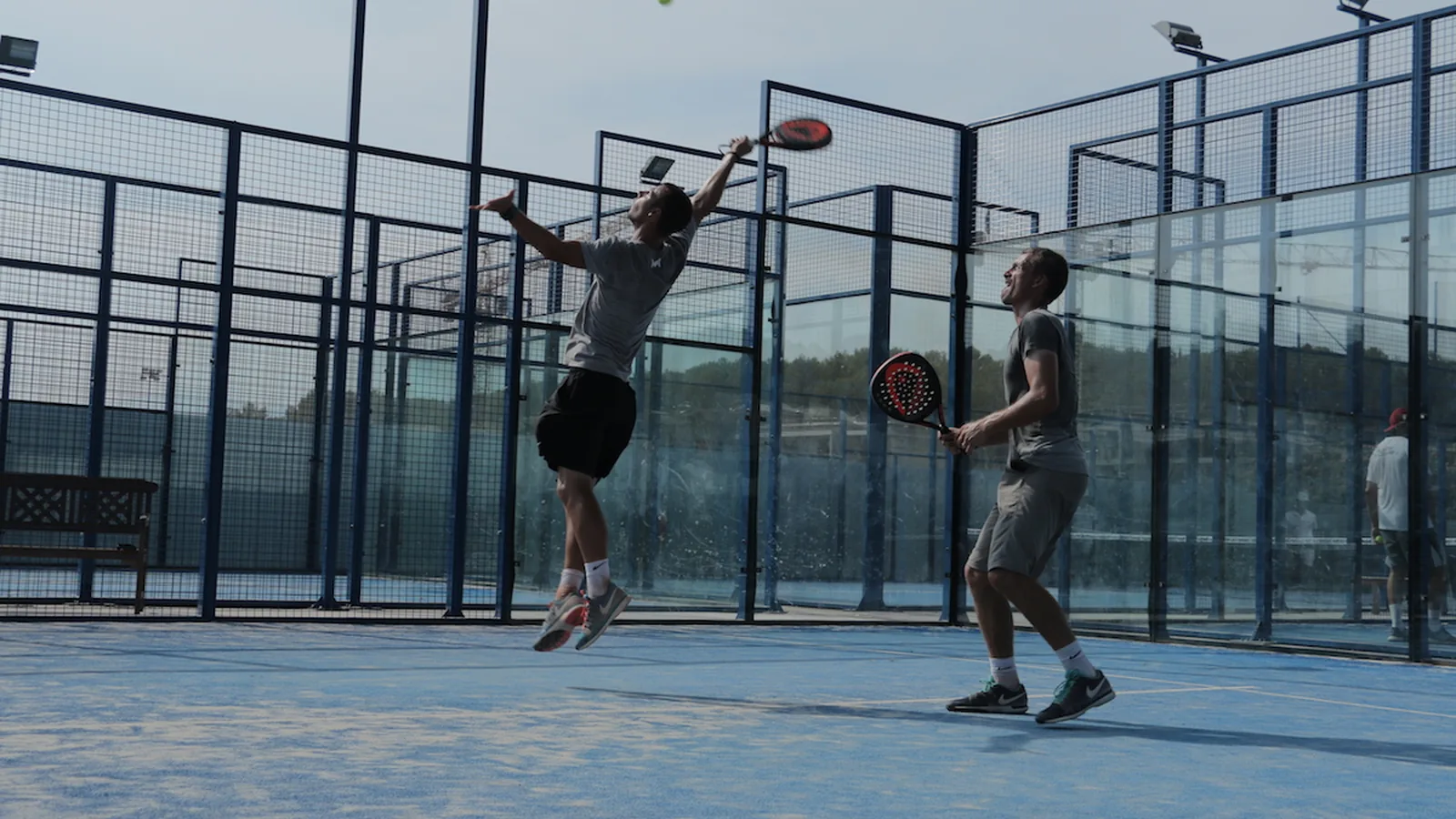
The smash becomes the clearest example. A beginner sees an easy ball and swings hard, often into the net or off the court. An advanced player reads the trajectory early, plants their feet, and times the shot to drop just past the service line. That split-second decision repeats dozens of times in a single match, and each repetition asks the calves, the core, and the shoulders to fire in sequence without rest.
Different Kinds of Fitness
Tennis and padel build athletes in different shapes. A tennis player needs linear sprinting speed to cover an open court that stretches over twenty metres from baseline to baseline. The serve and the forehand demand massive explosive power through the hips and shoulders. Matches can run for hours, so aerobic capacity matters as much as raw strength.
Padel asks for a narrower but more relentless set of skills. The court measures roughly ten metres by twenty, so sprinting gives way to constant multi-directional agility. Players shuffle sideways, pivot, and reset their feet dozens of times within a single point. Low balls skid off the glass at awkward angles, forcing deep lunges that put real strain on the hips and knees. A tactical rally near the net can turn into a string of anaerobic bursts, each one short but sharp, repeated again and again until someone makes a mistake.
A padel session in Sevenoaks on a Saturday morning can leave a fit club player breathing harder than an hour of casual tennis. The rest periods between efforts are shorter, and the directional changes never stop. The muscles used to brake and change direction work overtime in a way a tennis baseline rally does not require.
The Verdict
Padel deserves a fairer reputation. It is easy to learn, and that openness is the sport's greatest strength. A complete beginner can have a decent rally within their first hour on court. But mastery is a separate climb entirely, built on quick feet, sharp reflexes, and the stamina to repeat short, intense efforts for the length of a match.
Calling padel less athletic than tennis misunderstands both sports. Tennis tests the body across distance and time. Padel tests it across angles and repetition. A club in Solihull recently asked its members to wear heart rate monitors during a doubles match. Several reported numbers that matched their tennis sessions, and they covered only a fraction of the ground.
So the next time someone calls padel a game for people who do not want to run, point them towards a fifteen-shot rally between two advanced players. Watch the lunges, the sprints to the glass, and the split-second resets. Ask them afterwards whether that looked lazy. Most will admit it did not.
Tennis will always reward the player who can sprint the length of a court and hit a serve at speed. Padel rewards something quieter, a body that can change direction without warning, hold balance through a deep lunge, and repeat that effort point after point for two hours. Neither version of fitness beats the other. They simply train different muscles, different reflexes, and a different kind of patience.
That difference is exactly why so many tennis players who take up padel struggle in their first few months. Their fitness transfers in part, but the footwork patterns and the rhythm of short, sharp efforts feel unfamiliar. Mastering padel means building a new physical vocabulary, not simply applying an old one to a smaller court.