Fast hands, serious bite, but not the most forgiving Viper
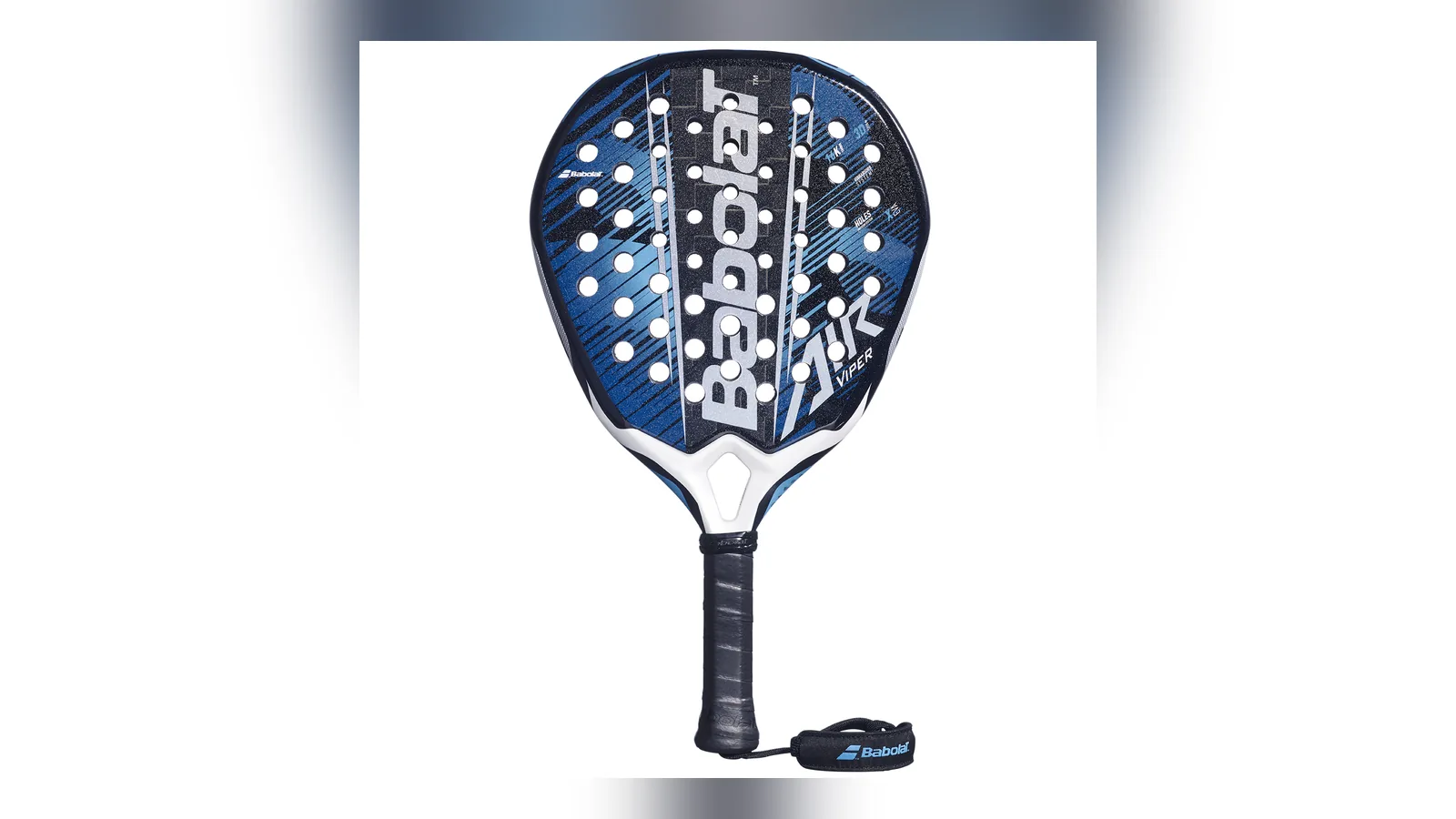
The Babolat Air Viper 2.6 is a racket built around one simple idea: speed should not mean giving away too much power. Its quick handling, firm carbon face and lively response make it particularly appealing at the net, where fast hands matter. The catch is that its compact hitting area still rewards players who strike the ball cleanly.
What is the Babolat Air Viper 2.6 like?
The Air Viper has always occupied an interesting position in Babolat's range. It sits between outright power and easy handling, aimed at players who want to attack without carrying a heavy racket through every exchange.
The 2026 Air Viper 2.6 weighs 355g plus or minus 10g, is 38mm thick and uses a carbon frame, 16K carbon surface and X-EVA core. Babolat gives it a teardrop shape and even balance, while independent testing tends to find the balance slightly higher in the hand. That difference is not surprising because balance can vary with the actual racket weight and production tolerances.
The more important point is how quickly it moves. This is a racket that feels noticeably easier to position than many conventional power frames. At the net, that matters. There is less effort involved in getting the head into position for a volley, block or quick counter.
Feel and construction
The 16K carbon face gives the Air Viper a firm, direct response. The ball does not sit on the racket for long. Instead, contact feels crisp and quite immediate, which will appeal to players who like clear feedback from the face.
It is not an unpleasantly hard racket, though. Babolat has included its Vibrabsorb System², which uses elastomers around the frame and handle to reduce unwanted vibration. That makes a difference because the Air Viper's basic character is still fairly firm.
The 3D Spin+ surface is another useful feature. The raised pattern and rough finish help the ball bite during slices, víboras and topspin shots. It is not a substitute for good technique, but players who regularly brush the ball should find plenty of grip from the surface.
There is also a Smart Buttcap, allowing the wrist strap to be adjusted or removed. It is a small detail, but one that makes sense for players who are particular about how the handle feels.
How does it play?
From the back of the court
The Air Viper is better from the back of the court than its attacking reputation might suggest. The relatively quick handling makes defensive preparation easy, particularly when you are stretched wide or forced to react to a fast ball.
There is enough rebound from the X-EVA core to help get the ball deep, but the racket does not feel like a trampoline. That is useful for players who prefer a more predictable response when defending against the glass.
The limitation is forgiveness. Several independent user reviews highlight the sweet spot as one of the racket's weaker areas. Miss the centre and the response becomes noticeably less convincing. That is not unusual for a performance-oriented racket, but it is something buyers should understand before spending £280 on it.
At the net
This is where the Air Viper earns its name.
Quick exchanges feel natural because the racket can be moved into position without much effort. A fast volley does not require a large swing, and that makes it particularly useful when opponents are hitting hard at your feet or body.
The racket also works well for players who like to move forward aggressively. A defensive block can quickly become an attacking ball because the frame is easy to accelerate. That transition from defence to attack is arguably its strongest characteristic.
There is a slight trade-off. Some players have reported that the racket can feel less stable when blocking very hard balls. That makes sense given its emphasis on speed rather than maximum mass behind the ball. If you prefer a substantial, planted feeling at the net, the Air Viper may leave you wanting a little more weight.
Overheads and smash
The Air Viper produces more power than its quick handling might suggest. Bandejas and víboras benefit from the combination of a firm face and easy acceleration, while the textured surface helps generate spin.
For smashes, it has enough punch to finish points without demanding the swing speed of a much heavier racket. That is one of its biggest attractions. Players who generate their own racket-head speed can get plenty from it.
It is not the racket I would choose for someone whose entire game revolves around maximum smash weight. A Technical Viper or another heavier diamond frame will make more sense for that player. The Air Viper is about getting into position quickly and then producing enough power to hurt the opponent.
Has Babolat changed much for 2026?
This is where things get interesting. Babolat says the 2026 model has a new shape intended to increase the hitting area and improve tolerance, alongside extra surface roughness and a stronger feeling of power.
Independent opinion is less dramatic. One Reddit user who had owned the 2025 version said the 2026 felt essentially identical in play, with the main difference being the colour. Other reviews have also described the racket as very similar to its predecessor.
That is not necessarily a criticism. The Air Viper was already a well-defined racket, and Babolat has refined rather than reinvented it. If you own the previous version, there is little reason to rush out and replace it purely for performance gains.
Verdict
The Babolat Air Viper 2.6 is one of the more interesting choices in the current Viper range because it does not rely on brute force. Its real strength is the combination of pace and agility.
I particularly like the way the racket suits fast net play. It is quick enough for frantic exchanges, firm enough to give useful feedback and powerful enough to punish a loose ball. The textured face adds another layer for players who use spin rather than simply hitting flat.
The sweet spot remains the sticking point. Even with Babolat's efforts to improve tolerance, this is not a racket that will hide poor contact. A few user reviews also point to questions over stability and power, although those views are not universal.
There is also the price. At £280 on Babolat's UK site, this is premium equipment. With some UK retailers selling it for considerably less, shopping around makes sense.
For the right player, though, the Air Viper 2.6 is a very good racket. It rewards quick hands, aggressive positioning and confident technique. It does not make those qualities for you.