
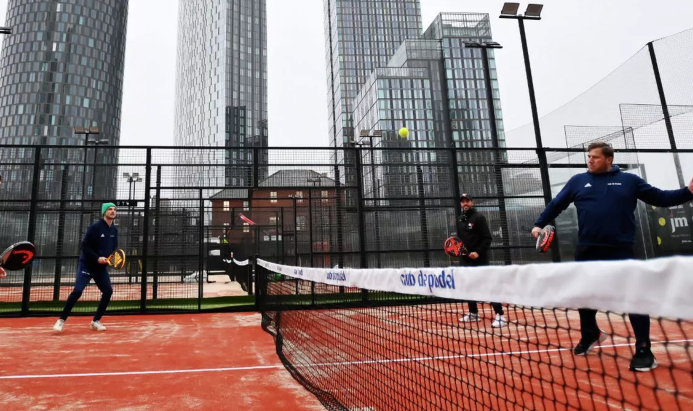
Padel has moved from niche pastime to weekly habit across the north west of England. Courts now sit beside leisure centres, retail parks, and tennis clubs. Players arrive after work, at weekends, and with families. The sport’s fast growth reflects local culture, space, and a clear appetite for social play.
This shift did not happen overnight. It followed steady investment, word of mouth, and a sport that fits how people in the region like to spend their time.
A sport that suits the north west
The north west has long backed participation sport. Football dominates, especially Manchester City, yet racket sports have deep roots through council courts and long-standing clubs. Padel slots neatly into this mix. Matches feel competitive within minutes, rallies last longer than tennis, and the walls keep everyone involved.
Weather plays a quiet role. Rain and wind can spoil open tennis courts for months each year. Padel courts, often enclosed or covered, keep play reliable. That reliability matters for adults booking after work and for clubs running leagues.
Travel patterns help too. Cities and towns sit close together. Players drive twenty or thirty minutes without fuss. A single venue can pull members from several postcodes, which supports busy schedules and full leagues.
Manchester as the main engine
Greater Manchester has become the region’s main padel engine. Indoor centres now run from early morning to late evening. Many started with two courts and added more within a year. Peak slots sell out days ahead.
Corporate leagues grew fast. Offices use padel for team sport nights, replacing five-a-side football for some groups. The sport suits mixed ability teams, and games finish within an hour. That timing fits modern work patterns.
Local coaches report strong crossover from tennis and squash. New players arrive each week through friends rather than adverts. That organic growth keeps retention high.
Liverpool and the Wirral follow close behind
Liverpool and the Wirral show a slightly different pattern. Coastal leisure culture and strong club identities shape uptake. Several tennis clubs added padel courts to keep members on site rather than losing them to private centres.
Weekend social sessions draw full bookings. Groups book a court, play short sets, then stay for food and drink. Padel works as an evening out rather than a pure training session.
Schools and universities now test padel as part of sport programmes. Students pick it up quickly and share clips online, which feeds interest beyond campus.
Lancashire’s steady expansion
Lancashire’s growth looks calmer yet no less real. Towns such as Preston, Chorley, and Blackburn support padel through multi-sport venues. Councils see it as a way to refresh underused tennis areas.
Families form a large share of players here. Parents play doubles, then children take beginner sessions. Coaches like the format since it teaches positioning and teamwork from the first lesson.
Membership models vary. Some venues run pay-as-you-play, others offer low monthly fees. Both models work, which shows demand cuts across income levels.
Who is playing padel
Padel in the north west attracts a wide age range. Most regular players sit between thirty and fifty. Many left team sports years ago and wanted something competitive without long training blocks.
Women’s participation stands out. Doubles play and smaller courts reduce intimidation. Clubs report near equal booking rates between men and women during peak hours.
Is padel only popular with former tennis players? No, and that answer explains much of its appeal. Many players come from football, netball, or no sport at all. The rules stay simple and rallies start fast.
The role of coaching and leagues
Coaching underpins long-term growth. Short beginner courses sell out quickly. Most run for four weeks with one session per week. Players leave able to rally, serve, and keep score.
Leagues keep courts full. Formats range from friendly ladders to structured divisions with promotion and relegation. Matches run weekly, so players build routine.
Coaches in the region often train abroad or through national courses, then return with fresh drills. That cross-border learning keeps standards high.
Economic and social impact
Padel brings clear local spend. Players pay court fees, buy rackets, and stay for food. Venues employ coaches, desk staff, and maintenance teams.
Social links form fast. Many players meet through padel and book again with the same group. That repeat behaviour supports stable revenue and strong communities.
Local councils note reduced pressure on traditional courts. Padel draws new users rather than shifting existing ones.
What comes next
More indoor courts are planned across the north west over the next two years. Developers favour warehouse conversions near ring roads. Access and parking drive site choice.
Junior pathways will shape the next phase. Schools and clubs now talk about regular competitions for under-sixteen players. That structure builds depth rather than short-term buzz.
Padel’s rise in the north west reflects fit, timing, and community. The sport meets people where they are, asks little to start, and gives plenty back. That combination explains why courts stay busy and waiting lists keep growing.